
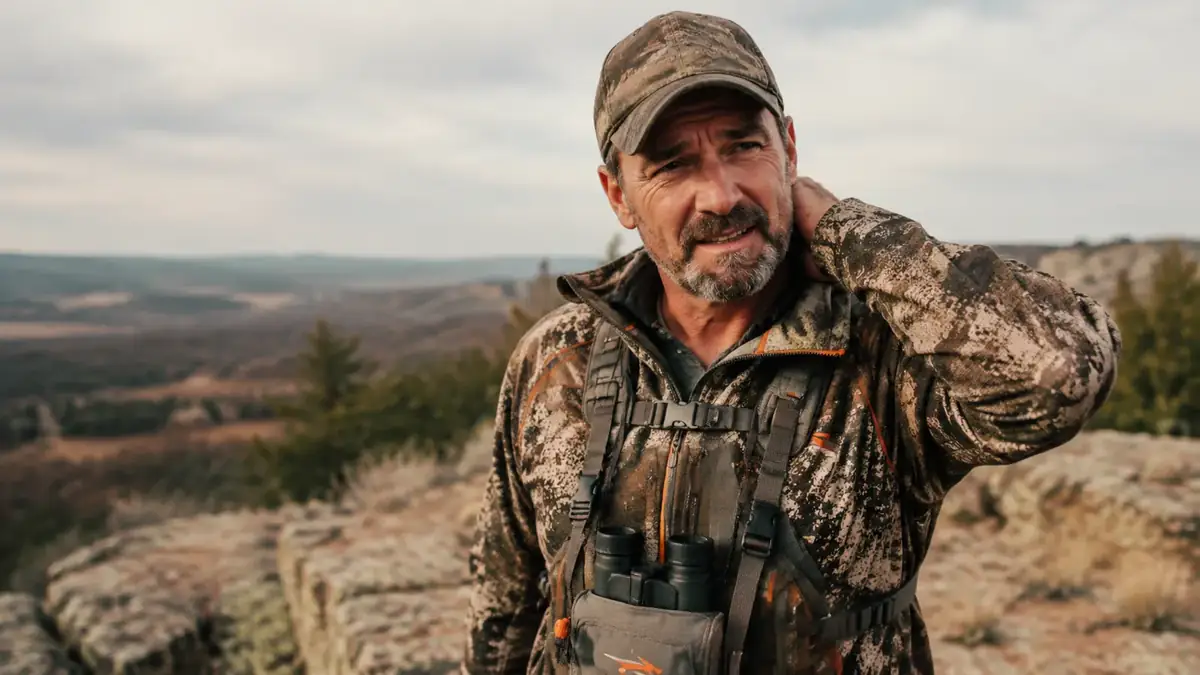
I'm going to start with the stuff that annoyed me, because every other review of the Vortex Crossfire HD 10x42 reads like it was written by somebody who used the thing for one afternoon in their backyard. I've had mine since last October. I've glassed wheat fields at 6am with frost still on the truck hood, sat in a treestand for four hours straight watching a tree line, and hiked a ridge in the Winding Stair range with these things banging against my chest the whole way up. Nobody warned me my neck would be sore by lunch on a long glassing day, or that the diopter ring would work itself loose in my pocket. So let's talk about that first, then get to why I still recommend them.
My name's Cole Merrick. I run cattle and hunt public and private ground around McCurtain County, mostly whitetail and hogs, some turkey in spring. I've owned three pairs of binoculars in my adult life, a cheap $60 Bushnell that fogged up on me during a January hunt I still think about, a hand-me-down Nikon that my father-in-law swore by, and now these Vortex Crossfire HDs. This isn't a spec sheet regurgitation. This is what actually happens when you strap a pair of 10x42s to your chest for a season, day after day, in weather that doesn't care what the box said.
The Quick Verdict
Genuinely good glass for the money, but the neck strain on long glassing sessions and the drifting diopter ring are real annoyances nobody mentions in the five-star reviews.
Amazon Check Today's Price →Before you spend another season squinting through fogged-up glass, see what actual hunters pay for the Crossfire HD today
Current price and availability change, so I always point people to check it live rather than trust a number I saw three weeks ago.
Amazon Check Today's Price on Amazon →How I've Actually Used These
I bought the Vortex Crossfire HD 10x42 last September, right before archery season opened here in Oklahoma. My plan was simple: glass the edge of a hay meadow at first and last light, looking for deer patterns before I committed to a stand location. I put roughly 60 hours behind them that first month alone, most of it in 15 to 45 minute stretches from a ground blind or the tailgate of my truck.
Since then I've used them for turkey scouting in the spring, glassing hog trails along a creek bottom that floods every March, and one memorable elk trip up in Colorado with my brother-in-law where I put in probably 10 hours of glassing over three days spread across two different basins. All told I'd guess I'm close to 400 hours behind this specific pair. That's the frame of reference for everything I'm about to tell you, not a weekend with a loaner pair from a buddy.
I'm not a gear reviewer by trade. I'm a guy who spends a lot of time outside and got tired of buying binoculars that let me down at the worst moment, usually right as a buck stepped into the open. So take this for what it is, a working account from actual field time, not a lab test done under ideal lighting in somebody's living room.
The Neck Strain Nobody Talks About
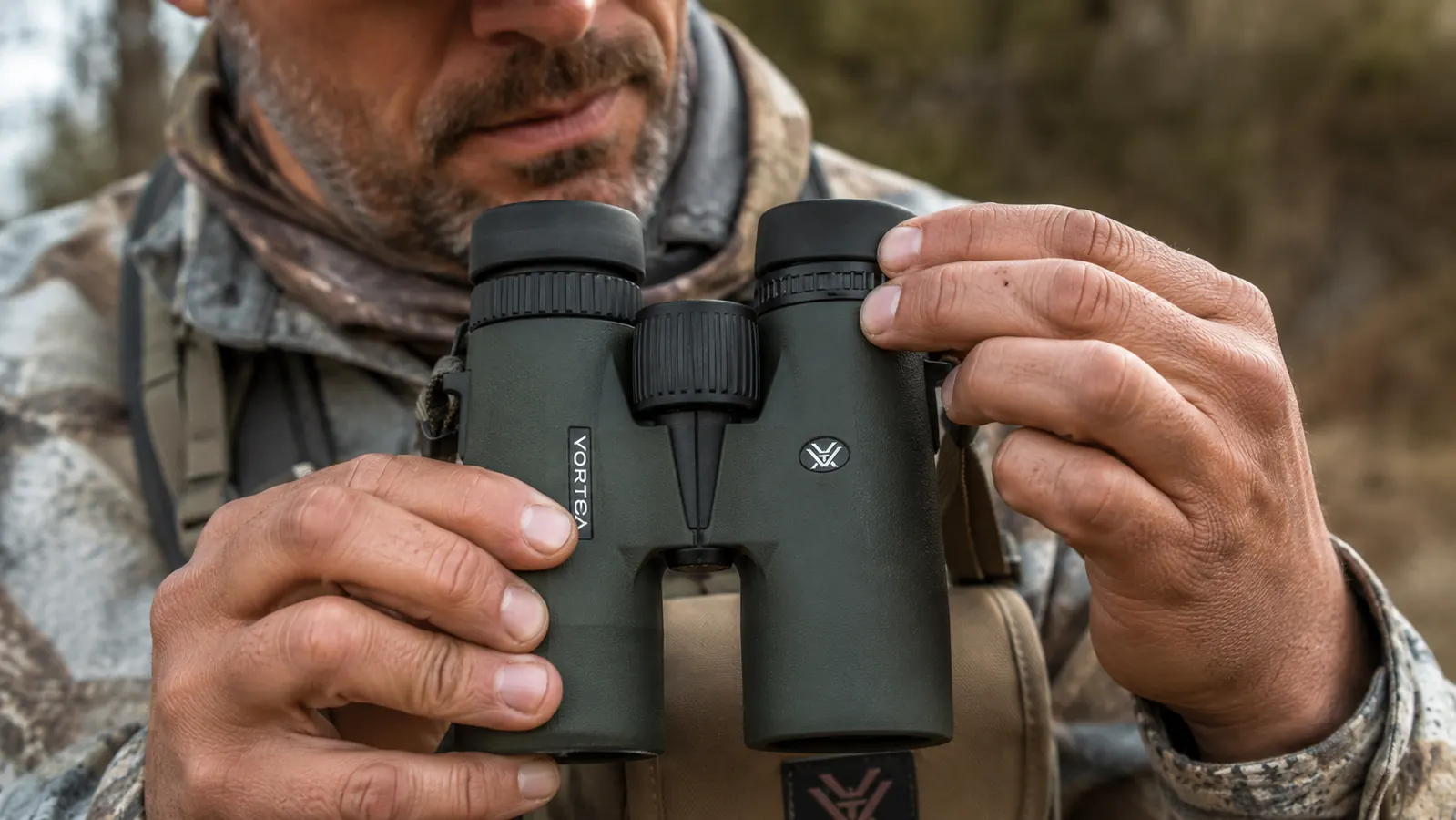
Here's the first thing that surprised me. At 10x42, these binoculars weigh in around 24.3 ounces. That doesn't sound like much until you've had them on a harness for three hours straight, glassing a ridge that just won't give up a deer. By hour two of a long sit, I noticed a dull ache starting at the base of my skull and running down into my traps. It's not the binoculars' fault exactly, any 10x42 is going to have some heft, but it's the kind of thing the glowing five-star reviews never bring up because most of those guys glassed for 20 minutes in their driveway and called it a review.
What helped was switching from the included neck strap to a proper bino harness that distributes the weight across both shoulders instead of hanging straight off your neck. That's a $25 fix, but it's a fix you have to know to look for. If you're planning full-day glassing sessions from a ridge or a treestand, budget for a harness on top of the binoculars themselves. Don't assume the strap that comes in the box is going to cut it past hour two, because I sure did and paid for it with a sore neck two weeks in a row before I finally ordered a chest harness.
I mention this because it changes the real cost of owning these. If you're already carrying a rifle, a pack, and a range finder, adding dead weight around your neck for hours at a time is the kind of detail that decides whether you actually use your optics or leave them in the truck out of laziness. A harness fixes it almost completely, but it's an extra purchase most reviews don't tell you to plan for.
Edge Softness, and Why It Matters More Than You'd Think
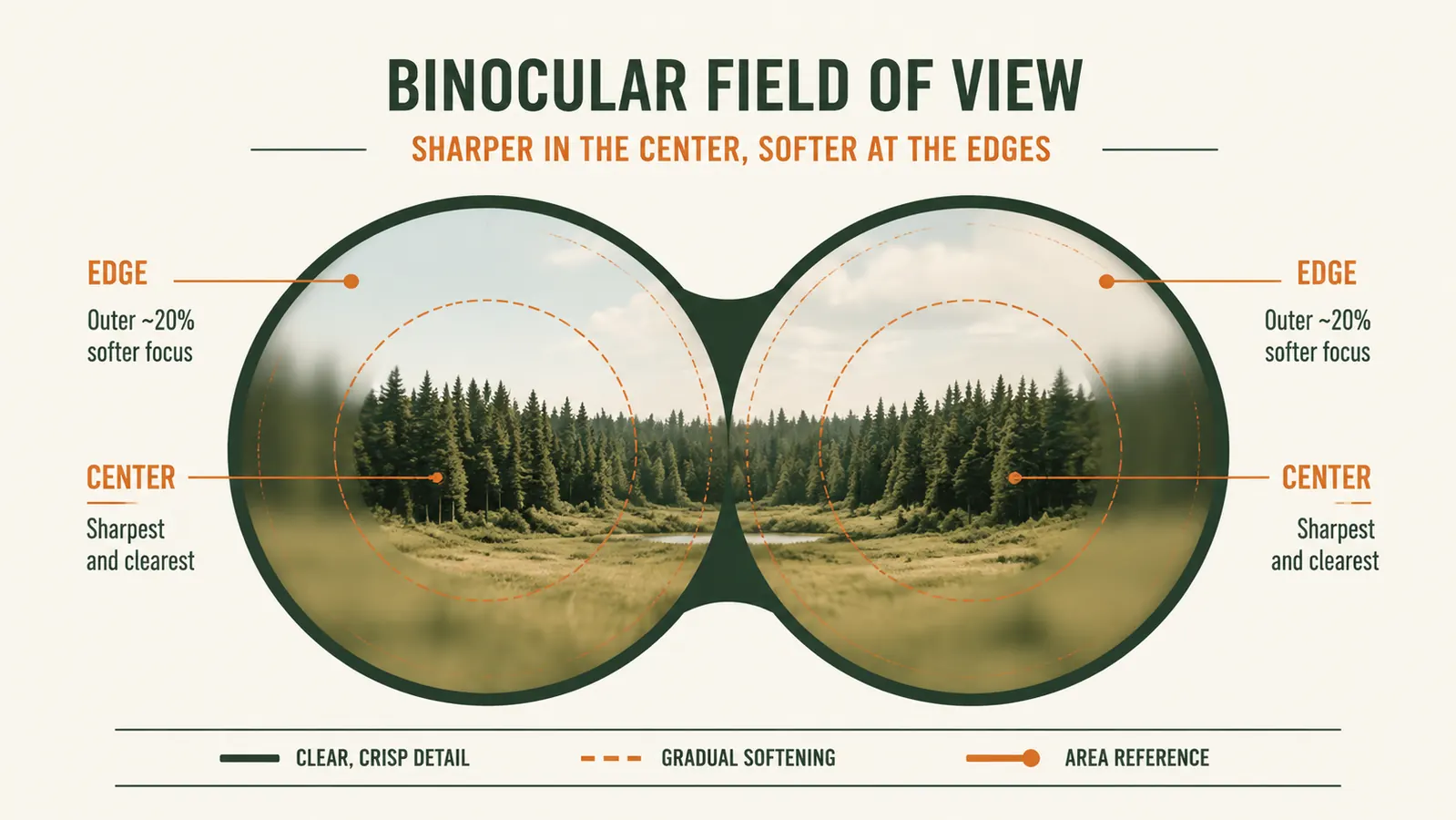
The center of the image through these binoculars is genuinely sharp. I want to be clear about that up front because I'm about to complain, and I don't want the complaint to drown out the fact that the glass itself is good for the money. Dead center, glassing a buck's rack at 300 yards in good light, the detail is there. Antler tines, tear ducts, the texture of the coat, it's all crisp.
But move your eye toward the outer 15 to 20 percent of the field of view and the image softens up noticeably. It's not a dealbreaker, but it's there, and it matters more than you'd think because when you're scanning a tree line or a field edge, you're not always centering the exact spot you want to look at. Your eye catches movement at the edge of the field first, then you center it. With the Crossfire HD, that edge catch is blurrier than it would be on a $600 pair of Vortex Diamondback HDs, let alone a $1,200 Razor. That's not a knock, it's physics and glass cost, but it's something the marketing copy conveniently leaves out.
In practice, this meant I trained myself to do more small scanning motions with my head rather than relying on peripheral clarity to catch a deer stepping out. It's a habit adjustment, not a fatal flaw, but it took me a couple weeks of glassing to stop being annoyed by it and start compensating for it. Once you know it's there, it stops costing you sightings.
Glare in the Wrong Light
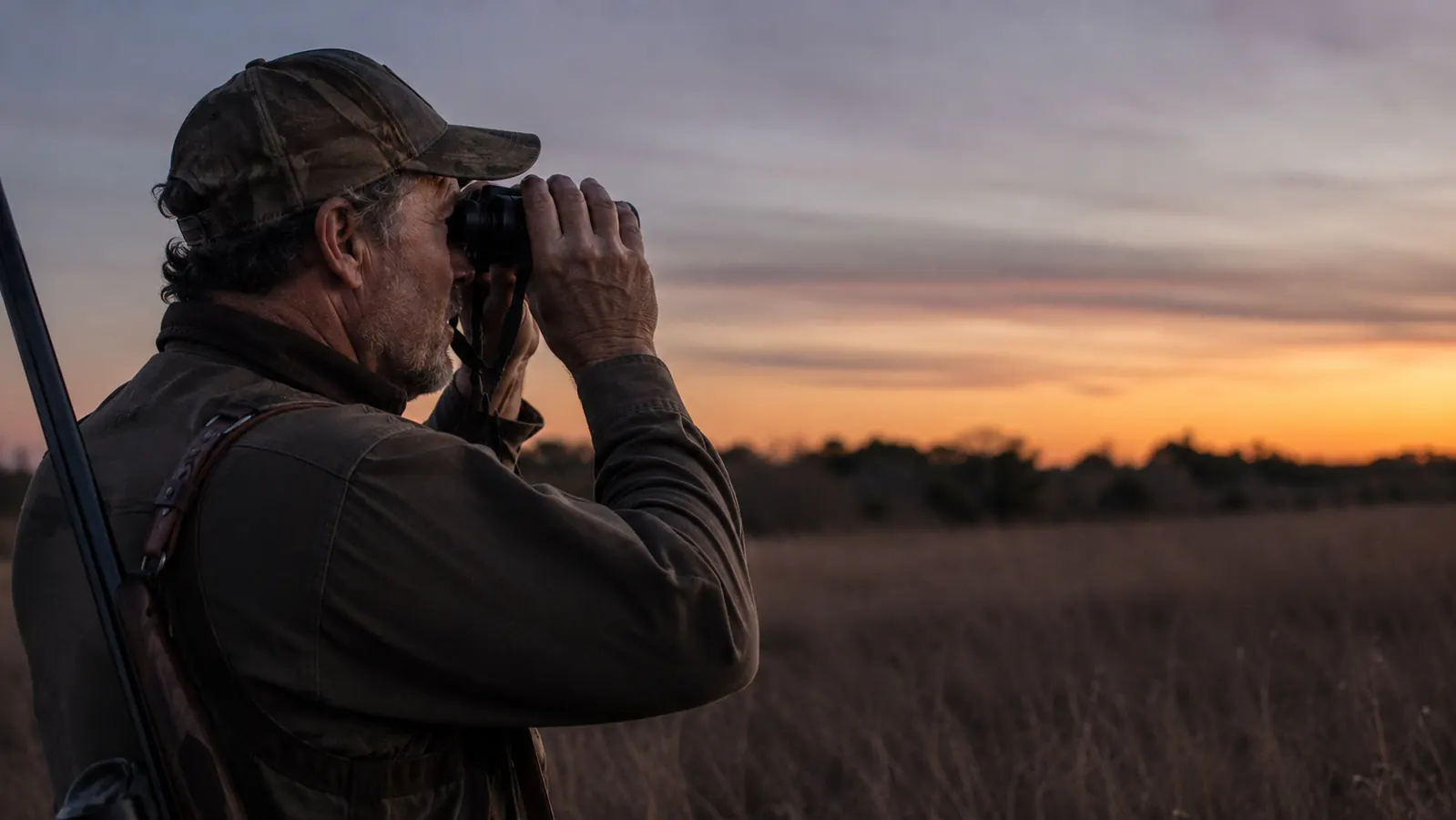
The second thing that caught me off guard, and this one actually cost me a shot at a decent buck back in November, is how the Crossfire HD handles side light. Glassing directly into a rising or setting sun is rough on any binocular, I don't expect miracles there. But even glassing at roughly a 45 degree angle to a low sun, I picked up more internal glare and washout than I expected from a pair marketed with fully multi-coated lenses.
That November morning, I was set up on a fence line with the sun coming up behind and to the right of me. A deer stepped out into a lit patch of grass about 150 yards off, and for a solid three or four seconds all I could make out was a glowing outline, no detail, no way to judge if it was a shooter buck or a doe. By the time the glare cleared enough to tell, the deer had already ducked back into the tree line. I'm not saying a $1,500 pair of Swarovskis would have solved that in every case, but I've since glassed the same fence line with a buddy's Nikon Monarch and the glare washout was noticeably less severe at the same angle.
My workaround now is simple: I try to position myself so the sun is more fully at my back rather than off at an angle, which isn't always possible depending on terrain and wind direction, but it's cut down on the glare problem considerably. It also helps to knock down a lens hood shadow with a cap brim when I know I'll be glassing into afternoon light.
The Diopter Ring That Won't Stay Put
This is the small annoyance that turned into a real problem for me. The right-eye diopter adjustment on the Crossfire HD is a simple ring, no locking mechanism, no detent click to hold your setting. I dialed mine in the first week I owned them, matching my eyes exactly, and within a month I noticed my close-range focus had gone soft. Took me embarrassingly long to realize the diopter ring had drifted from riding around in my truck console and rubbing against the glass box lid every time I hit a pothole on the way to the lease.
Now I check the diopter setting every single time I pull them out, which takes maybe five seconds once you know your reference number, but it's an extra step that a $150 pair of Nikon Monarchs I tried later didn't require because theirs has a firmer detent. It's a minor gripe on paper. In the field, when you're trying to make a quick ID on a deer before it spooks, fumbling with a soft-focused eyepiece costs you seconds you don't have.
What I Compared It Against
Before settling on the Crossfire HD, I spent a weekend at my father-in-law's place glassing the same tree line with three different pairs, his older Nikon Monarch, a friend's mid-range Bushnell Legend, and mine. The Crossfire HD beat the Bushnell handily on brightness and center clarity, no contest there. Against the Nikon Monarch it was closer, the Nikon edged it out slightly on edge sharpness and glare handling, which tracks with everything I've said above, but the Crossfire HD felt more solid in hand and came with that unlimited warranty the Nikon didn't match.
That comparison is why I keep landing on the same conclusion. This isn't the sharpest glass you can buy at any price, and anybody telling you otherwise hasn't glassed side by side with something twice the cost. But dollar for dollar against similarly priced binoculars, it holds its own and then some, mostly because of that warranty backing it up.
What I Liked
- Center-field sharpness is genuinely impressive for the price point
- Waterproof and fogproof seal has held up through two seasons of Oklahoma humidity and one accidental dunk in a creek
- Unlimited, unconditional Vortex warranty means a scratched lens or a bent hinge gets fixed free, no questions asked
- Comfortable eye relief for glasses wearers, I wear readers and don't lose field of view
- Rubber armor grip holds up even with wet, muddy hands
Where It Falls Short
- Neck and shoulder strain on glassing sessions past two hours without a proper harness
- Edge softness in the outer 15 to 20 percent of the field of view
- Noticeable glare washout when the sun is at a low side angle
- Diopter ring has no locking detent and drifts with regular carry and travel
- Center focus wheel gets slightly stiff in cold weather below 30 degrees
The glass is good enough that I stopped noticing the price tag. It's good enough that I started noticing everything else instead.
How the Warranty Actually Played Out
I put this to the test in January when I dropped the left barrel against a rock scrambling down a hillside after a hog. Put a visible scratch on the objective lens housing, not the glass itself but close to it, and dinged the hinge alignment enough that the image wouldn't merge cleanly at first. I called Vortex, described what happened with zero attempt to hide that it was my own clumsiness, and they sent me a prepaid shipping label the same week. Three weeks later I had them back, hinge realigned, no charge, no argument. That part of the ownership experience genuinely impressed me and it's worth factoring into the honest math on these, because a warranty like that changes the real cost of ownership if you're rough on gear the way I am.
Who This Is For
If you're a weekend hunter putting in scattered mornings and evenings, not marathon 6-hour glassing sits, the Crossfire HD is a smart buy. The center sharpness will impress you, the warranty backs you up if you're hard on equipment like I am, and at this price point you're not going to find better glass without spending three or four times as much. It's also a solid pick if you're new to hunting optics and don't yet know if you'll stick with it enough to justify a premium pair.
Who Should Skip It
If you're doing serious backcountry elk hunting where you're glassing for hours at a stretch across open basins, or if you hunt in low light constantly and need every bit of edge clarity and glare resistance you can get, save up for something in the Vortex Diamondback HD or Viper HD line instead. The tradeoffs I've described here are livable for a guy like me who hunts close to home on scattered mornings, but they'll grate on you fast if glassing all day is your whole hunt.
Know the tradeoffs going in, then decide for yourself if the Crossfire HD earns a spot in your truck
I'd rather you buy it knowing the neck strain and the diopter quirk than get surprised by them in the field like I was.
Amazon Check Today's Price on Amazon →