
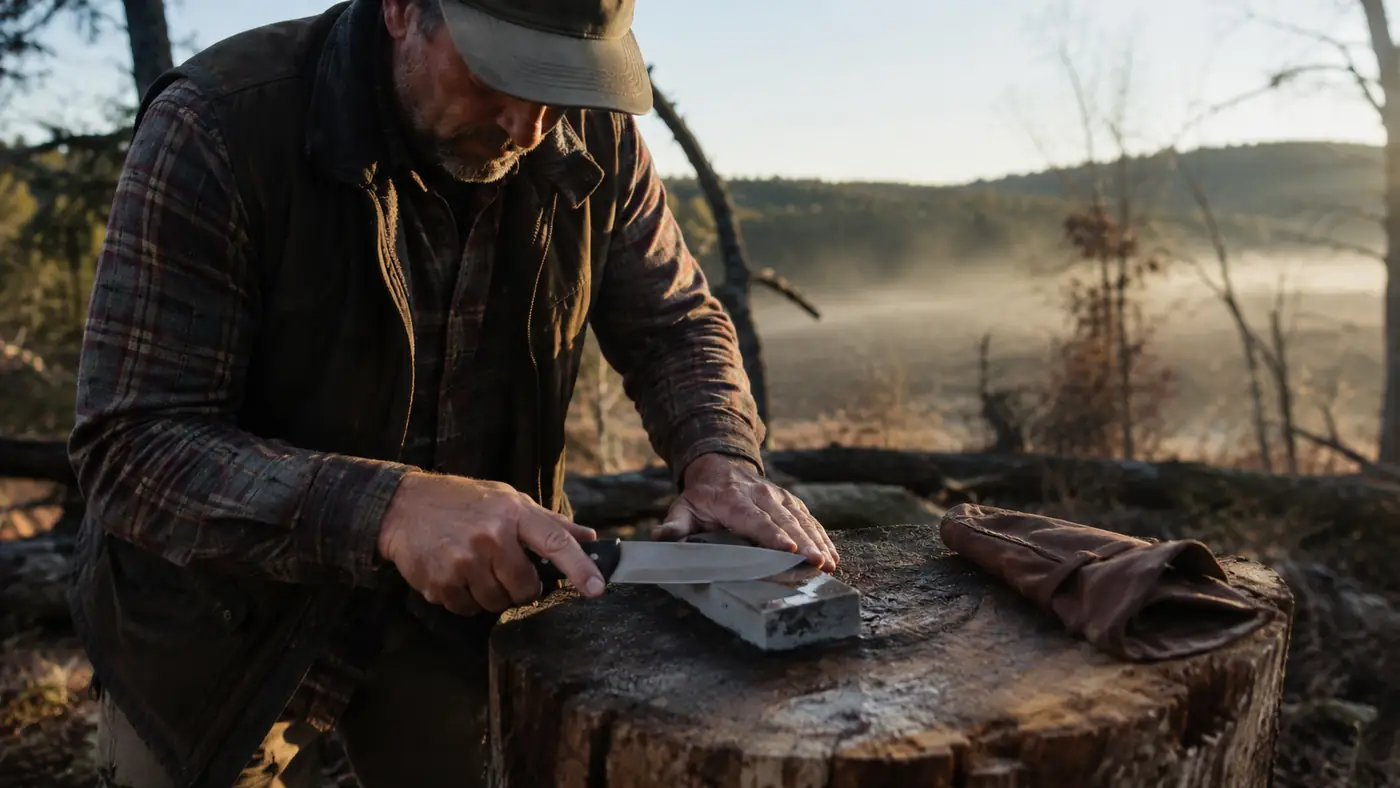
I pulled this Mossy Oak knife out of the box the week before deer season last November, ran my thumb across the edge the way I do with every new blade, and thought, that's not sharp. Not dangerous-dull, but not the kind of sharp you'd want on a knife you're about to trust with field dressing in the dark. Nobody tells you that part when they're showing you the fire starter kit and the paracord wrap and the compass in the pommel. So let's start there, because that's the honest way to start.
I'm Cole Merrick. I run cattle on 240 acres outside a town most people have never heard of in rural Oklahoma, and I've carried a fixed blade on my hip or in a truck console for most of my adult life. This isn't my first budget knife and it won't be my last. I bought the Mossy Oak 15-inch fixed blade because I wanted a beater for the truck, something I wouldn't cry over if I lost it in the grass, and I've used it hard since. This review is what I'd tell you standing at my tailgate, not what the Amazon listing says.
The Quick Verdict
A genuinely useful camp and chopping knife for the money, but it ships dull, the steel is soft budget stainless, and the sheath retention is looser than it should be. Buy it knowing what it is, not what the marketing photos suggest.
Amazon Check Today's Price →Skip the guesswork. See today's price and the current listing photos for yourself.
I'll walk you through everything I found, good and bad, but you should look at the actual product page before you decide anything.
Amazon Check Today's Price on Amazon →How I've Actually Used It
Since last November I've used this Mossy Oak knife to field dress two whitetail does, split kindling at probably a dozen weekend fires, cut baling twine more times than I can count, and pried open a stuck truck bed latch on a morning it was fourteen degrees out and I wasn't in the mood to be gentle with anything. I keep it in the truck now more than I carry it on my belt, because that's honestly where it earns its keep. It's not a knife I baby.
The second doe I dressed with it was in freezing rain, hands half numb, headlamp fogging up every few minutes. That's a rough test for any knife, and the blade itself did fine once I'd re-sharpened it earlier that week. What impressed me more than the edge was the grip. Even wet and cold, the textured handle never slipped in my hand, and that matters more to me than almost anything else when I'm working with a blade near my own fingers in bad light.
I did not use it as my primary hunting knife for actual detail work like caping or skinning around the eyes. I've got a smaller drop-point for that and I'll explain why later. What I'm reviewing here is the knife as it's actually marketed, a big fixed-blade survival and camp knife, and how it holds up doing survival-and-camp things.
I also handed it off for a week to my brother-in-law, Denny, who runs a small hay operation two counties over and needed something to cut twine and open feed bags all day. His feedback lined up with mine almost exactly. He liked the heft, complained about the same dull factory edge I noticed, and mentioned the sheath felt a little loose on his hip riding the tractor over rough ground. Two independent guys, same complaints, which told me my experience wasn't a fluke with one bad unit.
This isn't a lab test. It's one guy's truck, one guy's cattle chores, one deer season, and a fair number of Saturday fires. Take it for what it is.
What Nobody Tells You About the Factory Edge
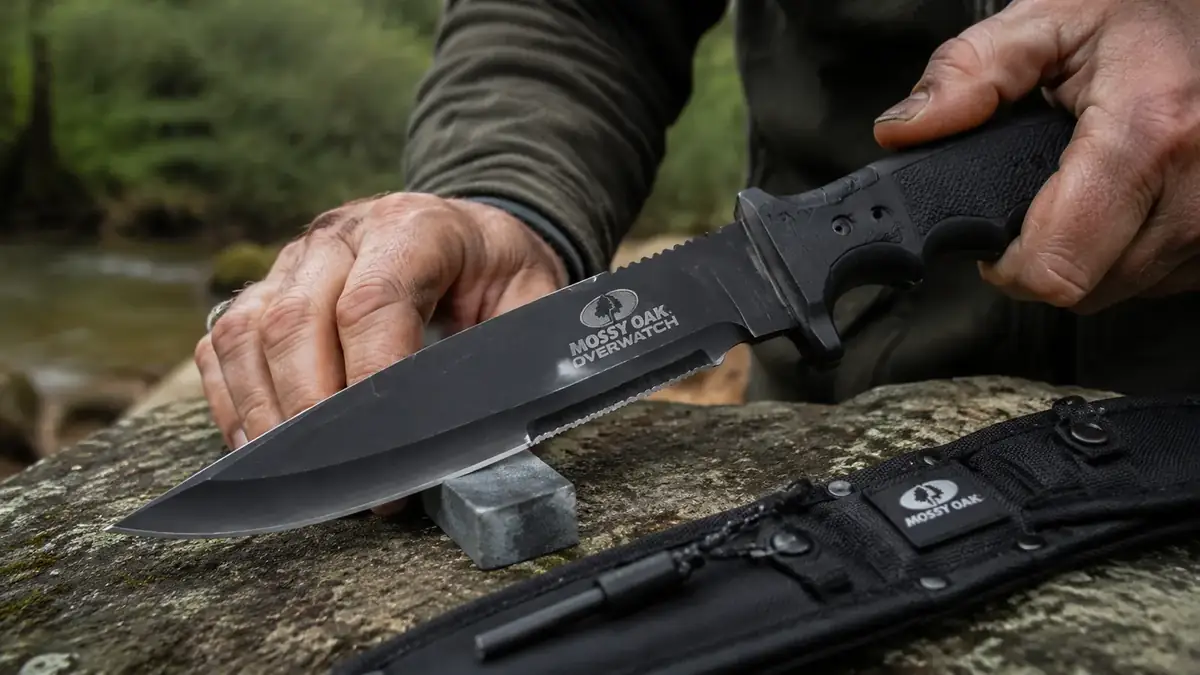
Here's the part that surprised me even though it probably shouldn't have. This knife does not come sharp out of the box, not by the standard I hold my hunting and camp knives to. It'll cut rope and cardboard fine right off the shelf, but if you're expecting to open the package and go straight to field dressing, you're going to be frustrated and possibly bruise a knuckle forcing it through hide that a sharp blade should glide through.
I spent about fifteen minutes on a pocket stone before I ever used it for real work, and that fifteen minutes made a night-and-day difference. After that first sharpening, it held a working edge through the first doe without a touch-up. But that's fifteen minutes most buyers aren't told to expect, and I've seen enough reviews online from people who clearly never re-profiled the edge and just assumed the knife was junk. It's not junk. It's a knife that needs you to finish what the factory started.
If you don't own a sharpening stone or don't know how to use one, budget an extra fifteen to twenty minutes and a cheap pull-through sharpener before this knife ever sees real work. Don't skip that step and then blame the blade. I'd also add, don't do this the morning of your hunt in a hurry. Do it the week before, sitting at the kitchen table, so you're not rushing a fifteen-degree angle by headlamp.
The Steel: What It Really Is, and Isn't
The listing doesn't spell out an exact steel grade, and after a season with it, I believe that's on purpose. This behaves like a budget stainless, something in the softer 3Cr to 5Cr range you see across a lot of import knives in this price bracket. It is not 1095 carbon, and it's nowhere near the harder tool steels you'd find on a bushcraft blade built for fine carving work. I want to be clear that I'm going by how it performs, not a lab spectrometer reading, but the behavior tells the story.
Softer stainless has real tradeoffs. On the plus side, it's forgiving. It resists rust well even after I left it in a damp truck bed overnight during a rainy stretch in December, no orange bloom on the blade at all. On the downside, it rolls at the very tip if you pry with it wrong, and I did roll mine slightly prying that truck latch. A five-minute pass on the stone fixed it, but a harder steel likely wouldn't have rolled in the first place.
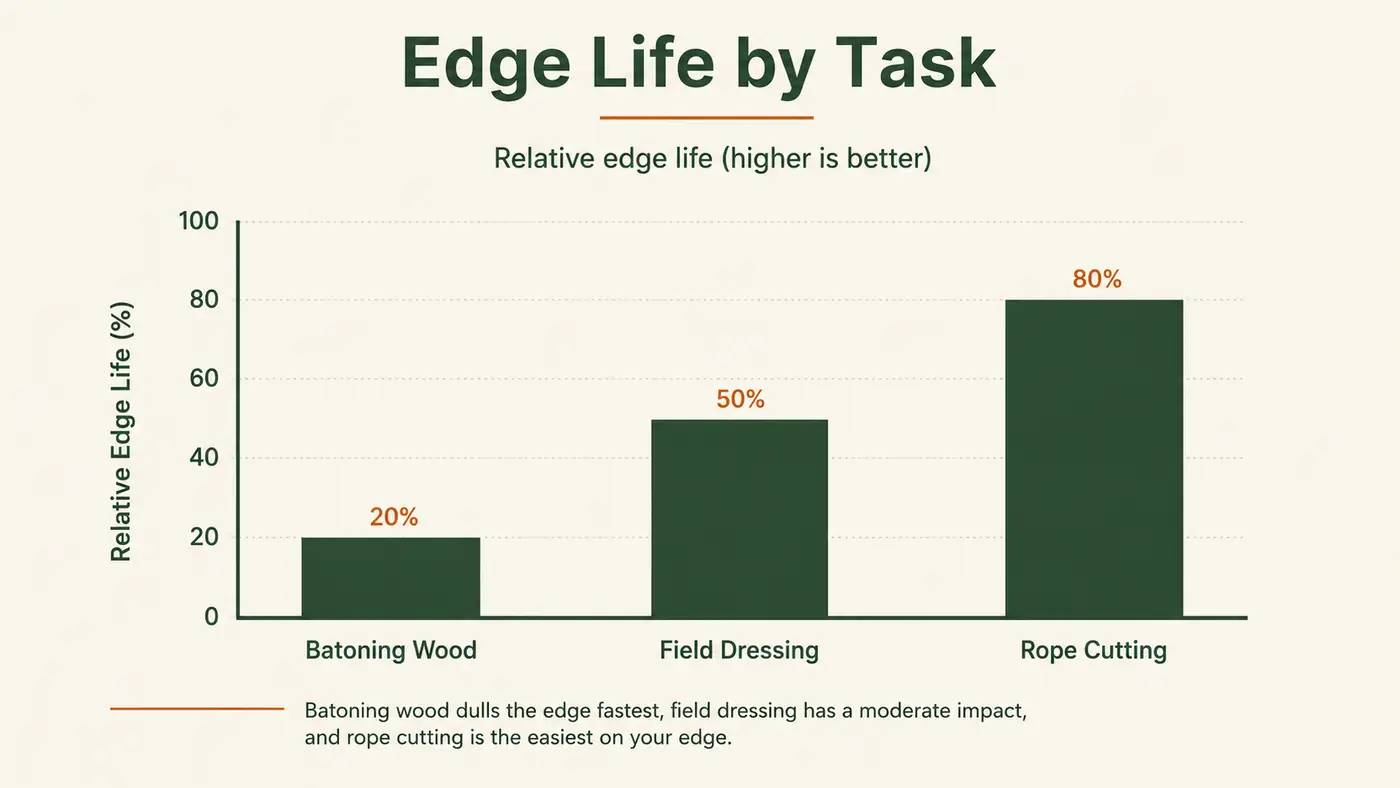
What this means practically is that this knife dulls faster than a premium blade under hard chopping use, but it also sharpens back up faster and easier with basic tools. If you're the kind of guy who touches up his edge every few uses anyway, you won't mind this steel one bit. If you want a knife that holds a razor edge through a full weekend of batoning firewood without attention, this isn't that knife. I found myself touching up the edge about every third fire, which for a knife in this price range didn't bother me, but it would bother somebody expecting premium performance.
The Sheath: Where It Actually Falls Short
This is the part of the Mossy Oak package I'd flag hardest for anyone buying it for field carry rather than truck storage. The nylon sheath does its job holding the knife, but the retention strap is looser than I'd like, and on two separate occasions while climbing over a downed fence line, I felt the knife shift enough in the sheath that I stopped and checked it wasn't about to fall out. It never did fall out on me, but I don't like feeling that on my hip when I'm sixty yards from the truck in thick brush.
If you're going to carry this on a belt through real terrain, I'd recommend either doubling the snap or adding a small strip of self-adhesive velcro to tighten the retention yourself. It's a ten-minute fix and it's worth doing before your first real hike with it. Don't assume the sheath it ships with is field-ready straight out of the package. And always keep the edge oriented away from your body when you sheath it, loose retention or not, that's just basic knife safety I'd tell anybody regardless of what blade they're carrying.
What This Knife Is Actually Good At
Once I stopped expecting it to be something it isn't, I started appreciating what it does well. This is a chopper and a camp utility knife first, a survival knife second, and a fine bushcraft or detail knife not at all. The weight and the length give it real authority splitting kindling and batoning smaller rounds for a fire, and the included fire starter rod in the sheath pocket is a legitimate nice-to-have on a cold morning when your hands are stiff and you don't want to fuss with matches.
The included sharpener stone built into the sheath is basic but functional for quick field touch-ups between real sharpening sessions. I've used it a handful of times to knock the edge back into working shape without pulling out my full stone kit, and it does the job it's meant to do, which is buy you a little more usable edge, not replace a proper sharpening.
The full tang construction is worth mentioning too, since it's the reason the knife takes hard use as well as it does. You can feel the steel running the length of the handle when you baton wood, no flex, no worry about the tang snapping under a mallet strike the way you'd get with a cheaper hidden-tang knife. The compass built into the pommel is more of a novelty than a real navigation tool, don't stake your life on it in the backcountry, but the fire starter rod and the tang construction are the two features on this knife that actually earn their keep.
Where I'd Steer You Wrong If I Called This a Bushcraft Knife
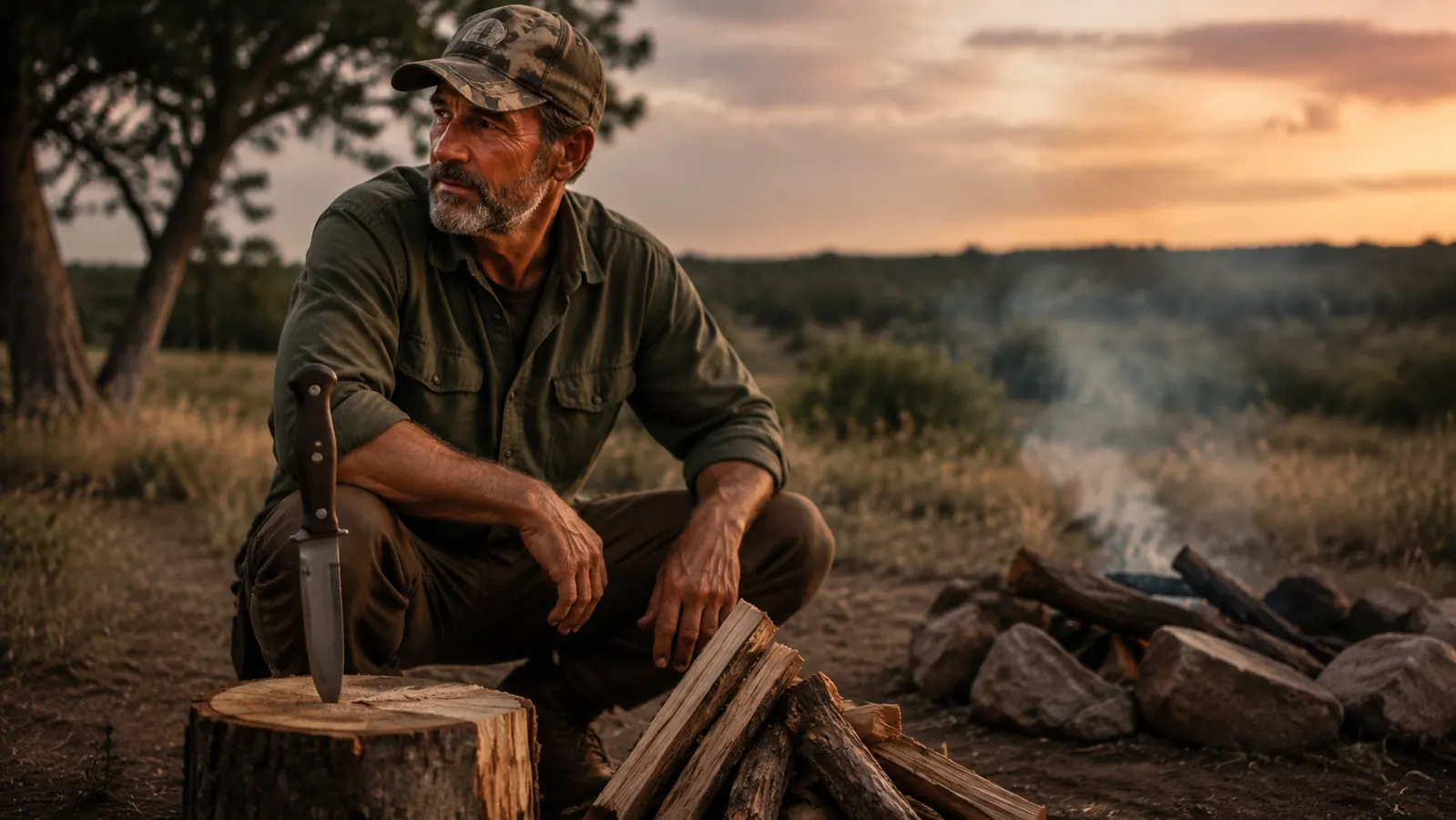
I want to be direct here because I've seen this knife marketed alongside bushcraft and survival gear in a way that sets up the wrong expectation. Real bushcraft work, fine feather sticks, notch carving, delicate skinning around joints, wants a thinner, harder blade with a full flat grind. This knife is thick-spined and has enough belly and weight that it's genuinely clumsy for that kind of precision work. I tried carving a simple pot hanger notch with it one evening and gave up, switched to my smaller knife, and had it done in five minutes.
So if the reason you're buying this is bushcraft carving and fine survival tasks, look elsewhere. If the reason you're buying it is a rugged camp chopper that also field dresses a deer competently once you've put a real edge on it, this earns its spot.
What I Liked
- Split kindling and batoned small rounds without chipping all season
- Fire starter rod in the sheath is a genuine convenience on cold mornings
- Resisted rust through a damp winter in the truck bed
- Sharpens back up fast and easy with basic tools
- Handles field dressing well once you've re-profiled the factory edge
- Textured grip stays secure even wet and cold
Where It Falls Short
- Ships dull, needs fifteen to twenty minutes of sharpening before real use
- Steel is soft budget stainless, tip can roll under hard prying
- Sheath retention is looser than I'd want carrying it through brush
- Too thick and clumsy for fine bushcraft or detail carving work
- Fire starter rod and included stone are basic, not a substitute for real gear
- Pommel compass is a novelty, not something to trust in the backcountry
It's not the knife the marketing photos suggest. It's a better knife than that, if you know what job you're actually hiring it for.
Who This Is For
This is the right knife for somebody who wants a rugged, low-cost truck or camp knife they won't lose sleep over if it gets left in the rain or handed to a nephew learning to whittle. If you hunt and want a heavier knife for chopping brush and field dressing after you've put your own edge on it, or if you just want a dependable backup blade in the tackle box or glove compartment, this earns its keep. It's also a reasonable starter knife for a teenager learning knife safety and basic field skills under supervision, given how forgiving the steel is and how affordable it is to replace if it gets lost or dulled beyond a quick fix.
Who Should Skip It
If you want a knife that holds a scary-sharp edge through a full weekend of hard use without a touch-up, or you're after a dedicated bushcraft blade for fine carving, pass on this one and spend more on a purpose-built steel. Same goes if you plan to carry it hard through brush country and want a sheath that locks the blade down without any modification on your part. Go in with clear eyes about what this knife is, and it'll serve you fine. Go in expecting a premium blade at a budget price, and you'll be disappointed, and that's on the expectation, not really the knife.
Know exactly what you're getting before it ships. Check the current listing and price.
I gave you the real rundown, dull factory edge, softer steel, loose sheath retention, and all. If it still fits what you need it for, here's where to look at it.
Amazon Check Today's Price on Amazon →