
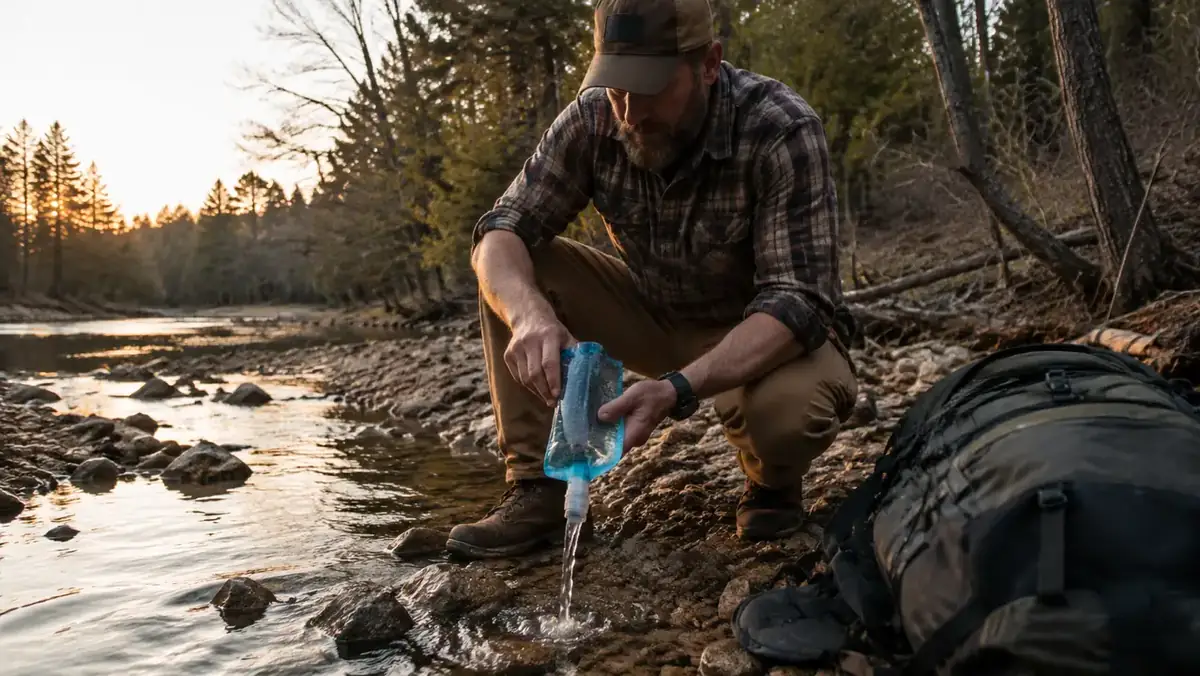
If you want the short answer before I get into the weeds: the Katadyn BeFree is the filter that rides in the side pocket of my pack on every backcountry trip I've taken through the Kiamichi and Winding Stair country over the last three years, and it's the one I hand a buddy who shows up without a way to treat water. Dusty, a guy I hunt and hike with, runs a LifeStraw setup, and I'm not going to sit here and tell you he made a bad call, because he didn't. Both of these filters will get you through a multi-day trip drinking safely out of creeks, stock tanks, and beaver ponds without making you sick. But they don't win in the same spots, and if you're standing in the outdoor aisle trying to pick one before your next trip, you need to know exactly where each one earns its keep.
Both of these run on the same basic idea, a hollow fiber membrane that strains out bacteria and protozoa like giardia and cryptosporidium down at a microscopic level, so in theory they're catching the same bad stuff. Neither one filters out viruses, which matters more if you're traveling somewhere the water supply is compromised by sewage and matters a lot less if you're pulling water out of a mountain creek in southeast Oklahoma or the Ouachitas. Where the two actually split apart is flow rate, how much punishment the membrane can take before it clogs, and how much backcountry water you can run through one filter before you're shopping for a replacement.
This isn't a comparison I built off a spec sheet in a warehouse somewhere. Dusty and I have run both filters side by side on the same water sources for going on two years now, mostly filtering out of the Mountain Fork River and a handful of stock tanks on leased ground near Beavers Bend. We've filled the same style bottles off the same muddy bank more times than I can count, passing filters back and forth to see which one worked harder for the same liter. Some of that water ran gin clear off a spring seep. Some of it looked like coffee with cream stirred in after a hard rain. Either way, we've had plenty of chances to see exactly where each filter starts to struggle and where it just keeps working.
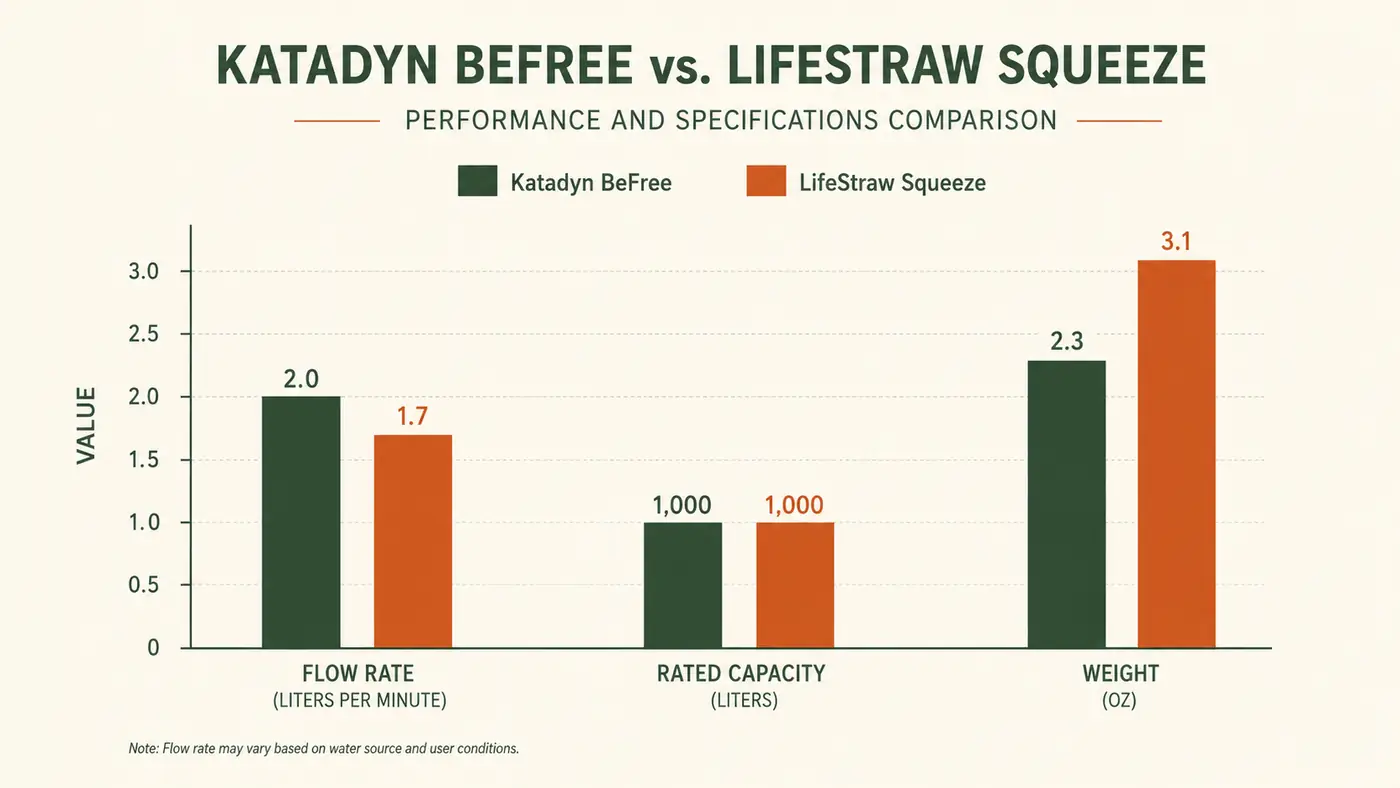
| Katadyn BeFree | LifeStraw | |
|---|---|---|
| Filter Type | Hollow fiber membrane, 0.1 micron | Hollow fiber membrane, 0.2 micron |
| Flow Rate | About 2 liters per minute when the membrane's clean | About 1 liter per minute, holds steadier over time |
| Rated Capacity | Roughly 1,000 liters before replacement | Roughly 2,000 liters before replacement |
| Filters Down To | Bacteria and protozoa, no viruses | Bacteria and protozoa, no viruses |
| Cleaning Method | Swish and shake in clean water, no scrubbing needed | Backflush with the included syringe |
| Weight | About 2.3 oz for the 1.0L soft flask | About 5 oz for the bottle and cap setup |
| Best Use | Fast refills, day hikes, ounce-counting backpackers | Multi-day trips, muddy or silty water, shared camp use |
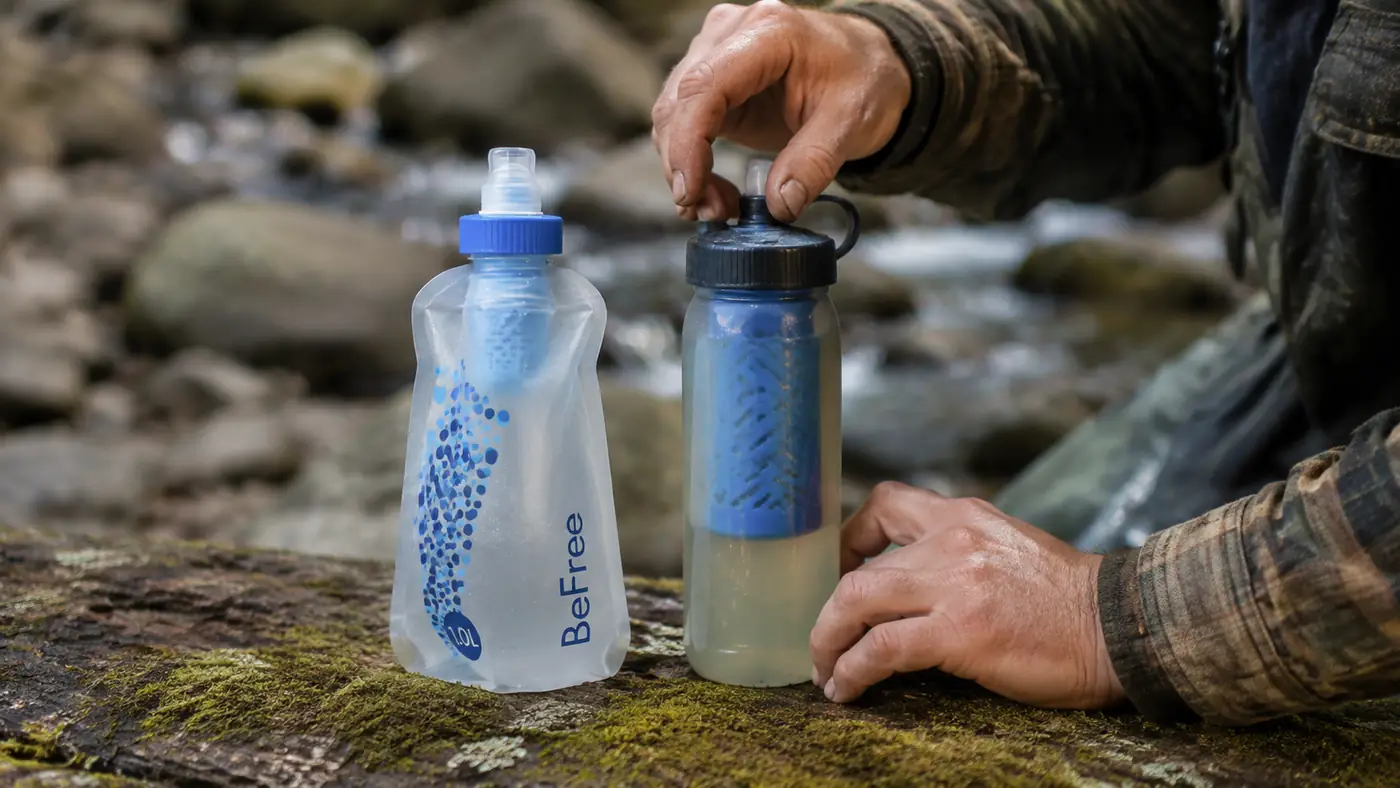
Where the Katadyn BeFree Wins
The first place the Katadyn BeFree pulls ahead, and it's the whole reason it lives in my pack over anything else, is flow rate. When that membrane's clean, I can squeeze a full liter in under a minute, no straw sucking, no pump handle wearing a blister into my palm. I ran it for five days on a scouting trip through the Winding Stair range last October, refilling off a creek that dropped to barely a trickle by day three, and I never once stood around waiting on water the way I used to with an old gravity bag that took the better part of ten minutes to push through a single liter.
It's also about as light as gear gets. The 1.0L soft flask folds down flat and stuffs into a hip belt pocket, and because it's a collapsible flask instead of a hard bottle, I'm not hauling dead plastic once it's empty. It screws onto most wide mouth bottles too, so if my flask ever splits on me I've still got a working filter and just need something else to hold water in. For anybody shaving ounces off a long trail, especially on a multi-day trip where every bit of pack weight matters by mile twelve, that's a real advantage and not just a line off the packaging.
The squeeze design itself is easier on your hands and your patience than a straw filter you have to suck through directly, which gets old fast once you're tired and thirsty at the end of a long day. I can squeeze straight into my cook pot, my dog's bowl, or a buddy's bottle without anybody putting their mouth anywhere near the source water. That flexibility matters more than people expect until they've actually spent a week living out of one filter.
There's also no pumping arm to wear out, no batteries to die on you at the worst time, and no UV pen to worry about dropping in the mud. It's about as close to foolproof as backcountry water treatment gets, which is exactly what you want when you're running on four hours of sleep and just need water in your bottle so you can keep moving toward camp.
I've put somewhere around sixty or seventy days on the trail on mine across three seasons now, and the only real failure I've had was letting the flask freeze solid on a cold November morning at a base camp near Talimena. That cracked the membrane and cost me a filter I hadn't even used up all the way yet. It taught me to sleep with the flask tucked inside my jacket on any night that's dropping below freezing, which is a real limitation worth knowing about before you buy one for a late-season trip.
Where LifeStraw Wins
LifeStraw earns its reputation on toughness. The membrane inside holds up to silty, muddy water without clogging up nearly as fast as the BeFree's does, and it ships with a backflush syringe that actually restores flow instead of just slowing down the decline the way shaking a flask does. Dusty ran his LifeStraw through two weeks of filtering out of stock tanks on that same Beavers Bend lease, water that looked like chocolate milk after every rain, and he came back saying it never once quit on him. The BeFree can filter that same water fine, but you'll be swishing and shaking that flask a lot more often to keep it moving at any real speed.
It's also rated for a higher total capacity before you need a replacement, and the housing feels like it's built to survive getting tossed in the bottom of a duffel bag and forgotten about for a season. If you're the guy responsible for keeping a whole hunting camp or a family trip supplied with water, that durability buys you peace of mind you don't get from a thinner soft flask that can split if it's packed wrong against something sharp.
The flow's slower right out of the gate, closer to a liter a minute instead of two, but in my experience it doesn't fall off as sharply after a few days of steady use the way the BeFree can if you're pushing dirty water through it without cleaning it as often as you should. For a longer trip where you can't count on stopping to swish a flask every hour, that steadier performance is worth something, even if it costs you time at every single refill.
It's also the filter I'd hand somebody newer to backcountry water treatment who I'm not sure is going to baby their gear the way I do. It forgives a little rough handling and a little neglect on the cleaning schedule better than the BeFree does, and for a first-time backpacker who's still learning the routine, that forgiveness matters more than shaving thirty seconds off every refill.
Tired of Standing at the Creek Waiting on Water?
A slow filter costs you daylight on the trail and patience you don't have left by mile ten. The Katadyn BeFree fills a liter in under a minute and folds down to nothing in your pack, and it's the filter I load first every time I'm packing for a trip.
Amazon Check Today's Price on Amazon →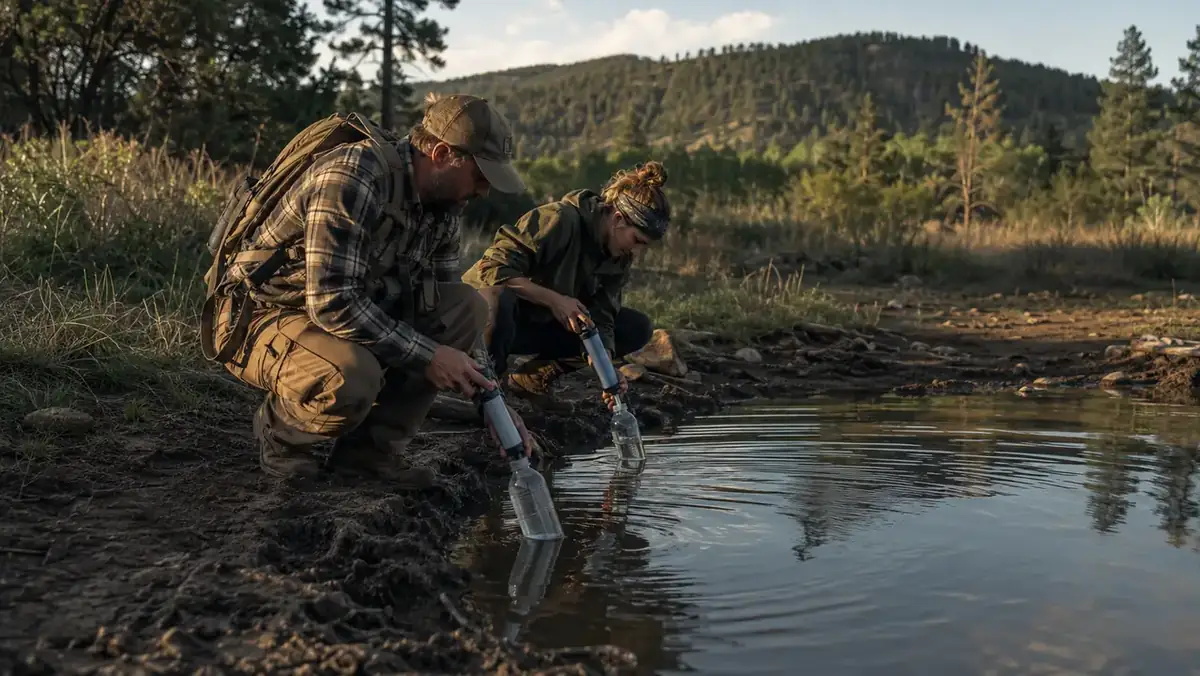
Who Should Buy Which
If you're a day hiker, a bowhunter making quick trips in and out of the woods, or you just hate wasting trail time standing at a creek bank, the Katadyn BeFree is the one to buy. It's lighter, it's faster, and it packs down small enough that you forget it's even in your bag until you need it. If you're headed out for a week or more, filtering water that's genuinely nasty, or you're the one responsible for keeping a whole hunting camp supplied, LifeStraw's toughness and higher rated capacity make it the safer bet, even though it's slower off the squeeze.
These two aren't mutually exclusive purchases either, if you're outfitting more than one person. Dusty and I have gone back and forth about it plenty of times sitting around a fire, and we've landed on keeping one of each between our two packs. I run the BeFree for anything under a week where speed matters and the water's reasonably clean. He keeps the LifeStraw loaded for the longer trips where he's filtering off worse water and doesn't want to babysit a more delicate membrane every hour on the trail.
Cost matters here too, and it's worth checking today's price on both before you decide, since it shifts from time to time. Neither one is going to break a gear budget, and the replacement filters for both run reasonable enough that you shouldn't let sticker price alone make the call. Buy the one that matches the kind of trips you're actually taking, not the one that happens to be cheaper on a random Tuesday.
Bottom line, and I'd tell you this standing at the trailhead: if you want the filter that gets water in your bottle the fastest and weighs next to nothing, take the Katadyn BeFree. If you want the one that shrugs off the muddiest water you can find and keeps working after two weeks of hard use, LifeStraw won't let you down. Neither one is a bad choice. I just know which one is riding in my pack on the next trip out.
Don't Let a Slow Filter Cost You Daylight on the Trail
The Katadyn BeFree fills fast, weighs almost nothing, and has been the filter in my pack on every trip through the Kiamichi and Winding Stair country for three years running.
Amazon Check Today's Price on Amazon →