
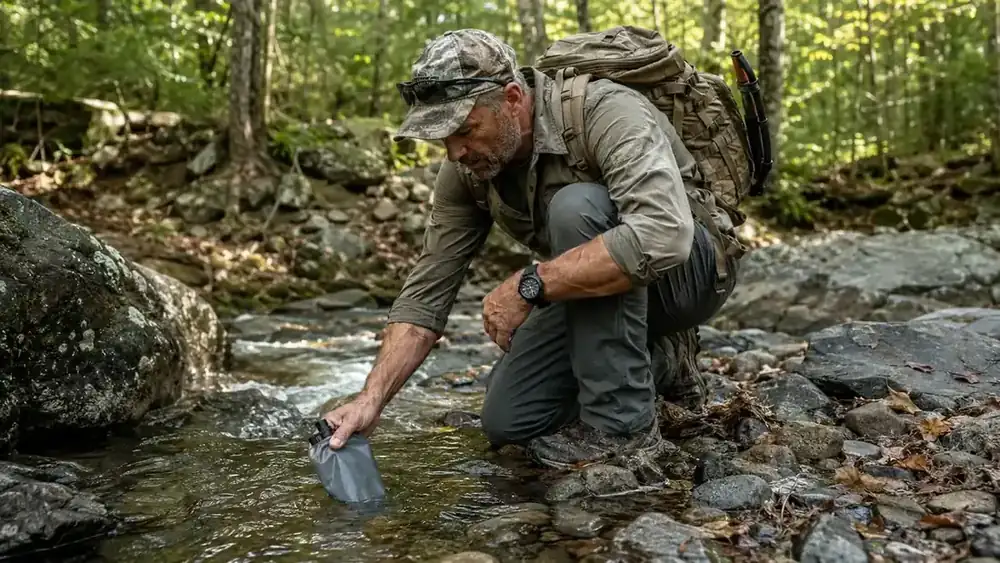
I picked up my first Katadyn BeFree the week before a three-day trip into the Ouachitas last spring, mostly because I was tired of hauling a hard-sided pump filter that took up half my pack and required both hands and a good five minutes just to fill one bottle. I wanted something I could clip to a shoulder strap, dunk in a creek, and drink from in under a minute without setting my pack down. That trip turned into a full season of using this same flask on every hike, hunt, and float I've made since, from muddy stock ponds back home to clear mountain-fed creeks a good six miles from the truck.
This isn't a rundown of a spec sheet. I'm not going to quote you a micron rating and call it a review. I'm going to tell you what it's actually like to rely on this filter, trip after trip, because that's the only kind of review that ever helped me buy gear worth trusting my drinking water to.
The Quick Verdict
After a full season of real trail use, the Katadyn BeFree earns its spot in my pack on flow rate and packed weight alone, though the membrane's fragility and the flask's eventual wear are tradeoffs you need to go in knowing about.
Amazon Check Today's Price →Tired of standing at a creek for five minutes just to fill one bottle?
The Katadyn BeFree is the filter I reach for on every trip now, whether that's a quick afternoon hike or a three-day pack into the backcountry. Check today's price and see why it's become the one piece of gear I never leave behind.
Amazon Check Today's Price on Amazon →How I've Used It
My use case is pretty straightforward. I filter creek and lake water on backpacking trips in the Ouachitas two or three times a month during the season, I've used the same flask on bowhunting trips where I'm relying on a stock pond or a slow-moving branch for water, and I keep a second one in the truck for whenever we end up somewhere the tap water tastes like it came out of a ditch. That adds up to somewhere north of forty fills over the last seven months, across creek water, stagnant pond water, and one memorably silty crossing after a hard rain where the water looked more like coffee with cream than anything I'd normally drink.
I didn't baby this thing either. It's ridden loose in the bottom of a pack, gotten stepped on once while drying on a rock, and spent more nights than I can count crammed into a side pocket next to a multitool and a folding saw. That's the kind of real-world handling that tells you something a controlled bench test never will.
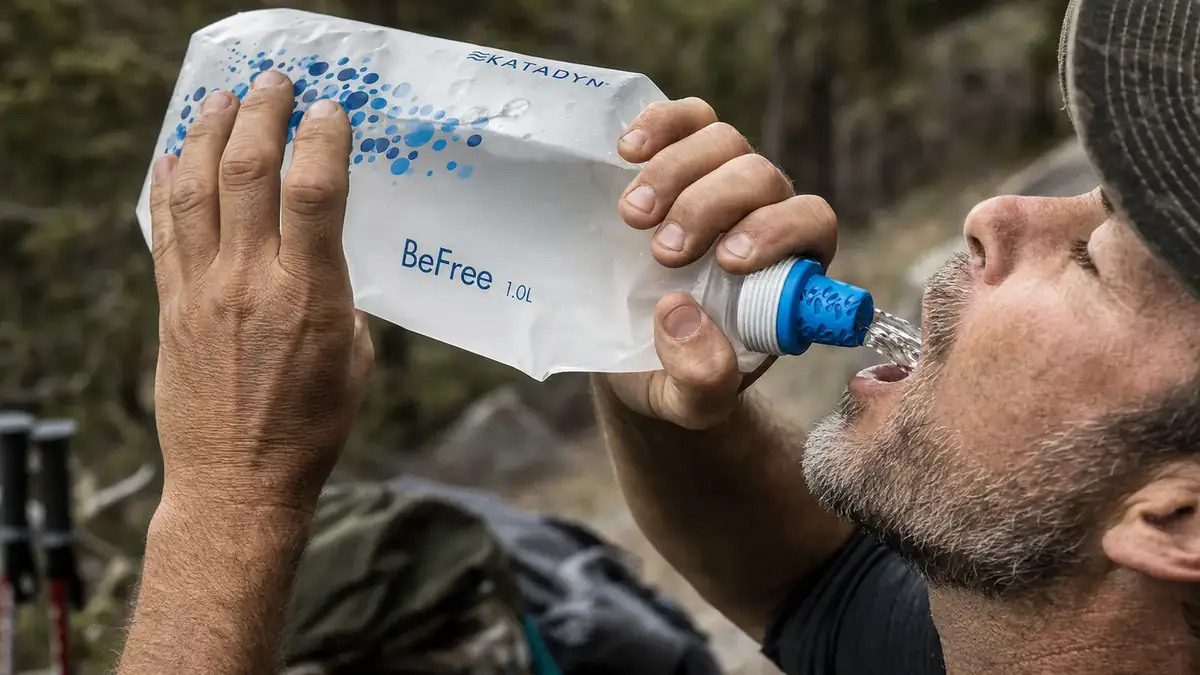
For anyone who hasn't handled one, the Katadyn BeFree is a 1.0-liter soft collapsible flask with a filter cap that threads onto the top. You dip the flask into the water source, let it fill, screw the cap on, and squeeze. Water passes through a hollow fiber membrane in the cap and comes out clean on the other end, straight into your mouth or into another bottle. It's a squeeze system, not a hanging gravity bag, and there's no pump handle to work either. That distinction matters, because the whole appeal here is speed. There's no pumping, no waiting on gravity to do the work over ten or fifteen minutes. You fill it, you squeeze, you're drinking inside a minute.
Flow Rate: Where the BeFree Actually Earns Its Reputation
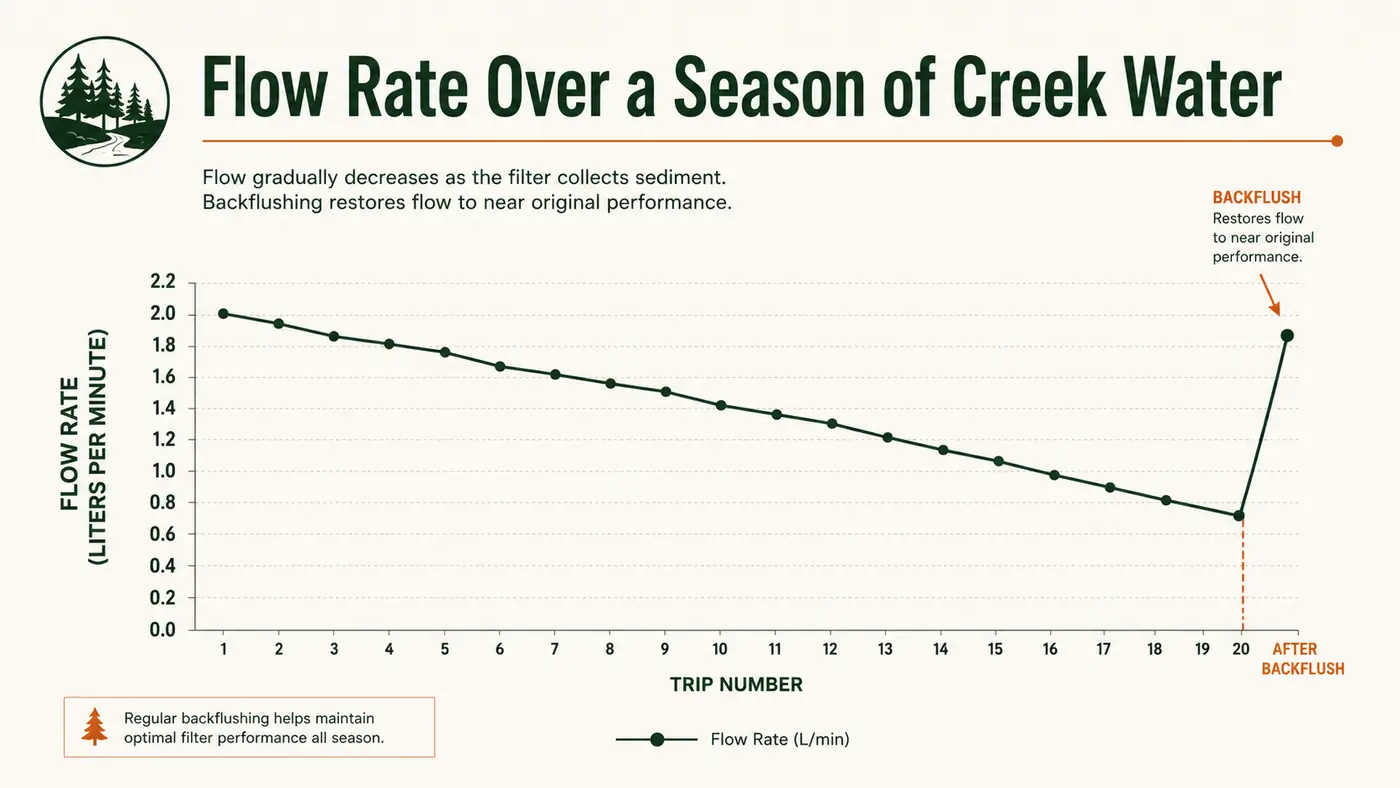
Katadyn advertises up to two liters a minute on a fresh filter, and in clear creek water, brand new out of the package, that number is close to honest. I timed my first few fills that spring trip and got right around ninety seconds for a full liter squeezed straight into a cooking pot. Compare that to a pump filter where you're working a handle the whole time, or a gravity system where you hang the bag and go set up camp while it slowly drips through, and the BeFree wins on pure convenience every time water is reasonably clear.
Where it gets more honest is once the filter starts loading up with sediment. By trip number ten or so, filtering out of a slower stretch of creek with some algae and fine silt in it, I noticed the squeeze taking real effort, enough that my hand was tired by the time I'd finished a liter. That's normal for any hollow fiber filter, but it's worth knowing going in that the flow rate you see advertised is a best-case number, not what you'll get every time, especially once you're filtering water that isn't running clear over rock.
Backflushing brings a lot of that performance back. Katadyn includes a small syringe with the BeFree specifically for this, and pushing clean water backward through the membrane after a dirty trip makes a real difference. I got in the habit of backflushing every third or fourth outing, and each time the next fill felt noticeably easier. Skip that step for too long and you'll feel it in your forearm before you feel it anywhere else.
Filter Life and What a Season of Creek Water Does to It
Katadyn rates the membrane at up to 1,000 liters before replacement, and I haven't hit that number yet, but I have hit real wear. Around month five, after a stretch of trips where I was filtering out of warmer, slower water than usual, I started noticing a faint musty smell coming through even right after a fill. A little research told me that's a known issue with hollow fiber filters that sit wet and warm between uses, and the fix is simple enough: dry it out completely between trips and store it somewhere it can breathe, not sealed in a plastic bag in a hot truck. Once I changed how I stored it, the smell went away and hasn't come back.
The bigger long-term concern I'd flag is the membrane's fragility. Katadyn is upfront that this filter can't be exposed to freezing temperatures once it's been used, because any water left inside the fibers will expand and crack the membrane, and once that happens you've got a filter that no longer filters anything. I found that out the hard way on a late-fall trip when overnight temps dropped into the low thirties and I hadn't thought to bring the flask into my sleeping bag with me. The filter still passed water the next morning, but flow rate had dropped noticeably, and I'm not fully confident it was doing its job as well as it had been. Since then I sleep with it in my bag any time there's a real chance of frost, no exceptions.
The flask itself, separate from the filter cap, has held up better than I expected given how much abuse it's taken. It's a soft, collapsible material, and I was worried early on that a puncture from a stick or a rock in the bottom of my pack was inevitable. Seven months in, mine has one small nick near the seam that hasn't grown or leaked, but I know from other hikers I've talked to on the trail that punctures do happen, and there's no patch kit included. If you're rough on gear, that's a real consideration.
Cold Weather Use: Where the BeFree Shows Its Limits
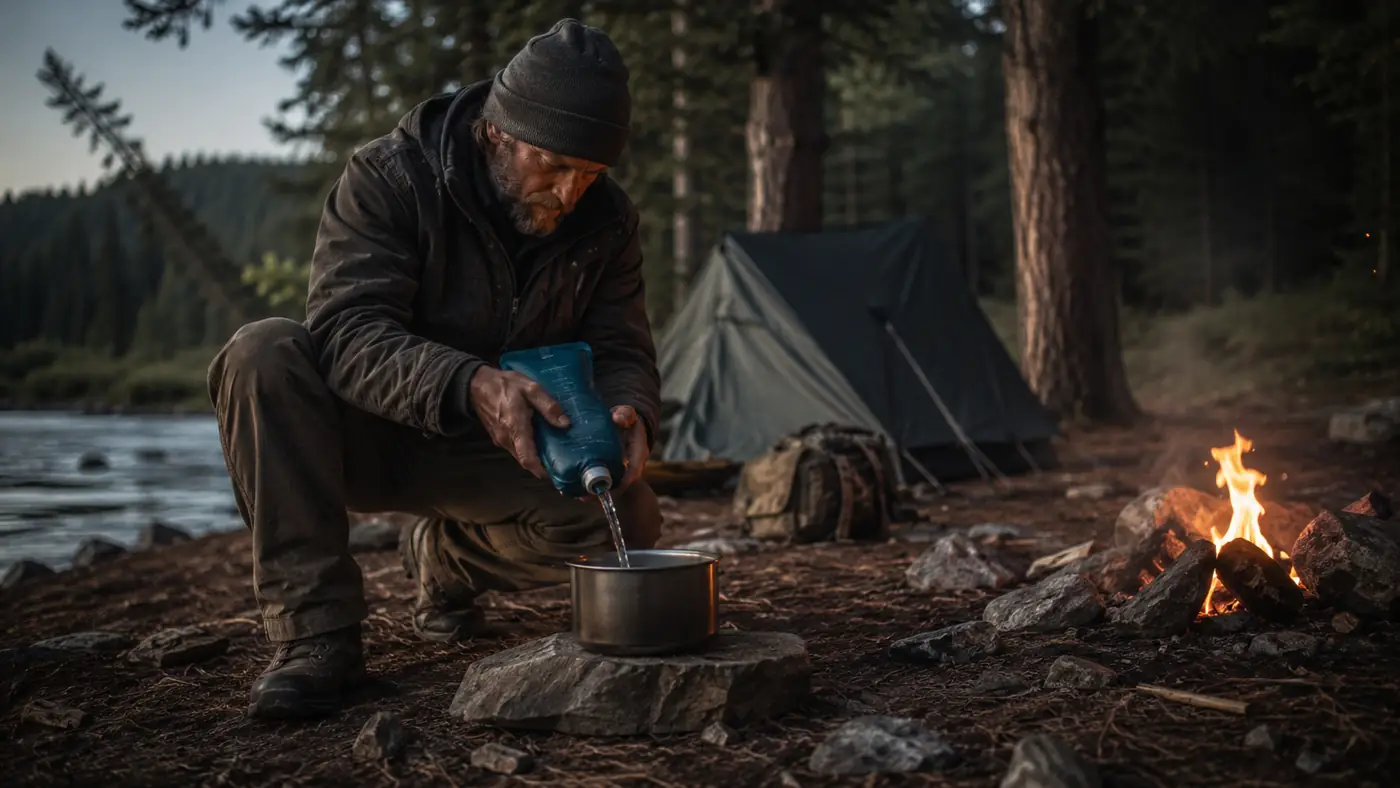
I already mentioned the freezing issue above, but it's worth its own section because it's the single biggest limitation I've run into. This filter is genuinely built for three-season use, not winter. Once the temperature is dropping below freezing overnight, you either sleep with the filter or you're taking a real risk of cracking the membrane and not knowing it until you're relying on water that isn't actually being filtered properly.
Beyond the freezing risk, cold water itself just moves slower through any hollow fiber membrane, BeFree included. Filtering out of a near-freezing mountain creek in late fall took noticeably longer and required more squeeze effort than the same fill would in summer. It still worked, and it still got the job done, but if you're planning serious cold-weather trips, I'd pair this with a plan for melting snow or warming water rather than expecting the same fast fills you get in warmer months.
For everything else, spring through the tail end of fall, the flow rate held up fine, and I never once got caught without safe water on a trip. That's the honest tradeoff with the Katadyn BeFree: excellent for the season it's built for, genuinely limiting outside of it.
What I Liked
- Fast flow rate on clean water, easily the quickest fill I've gotten from any filter I've owned
- Packs down small and weighs almost nothing compared to a hard-sided pump filter
- Backflush syringe included and genuinely restores flow rate when used regularly
- Simple to use one-handed at a creek bank without setting your pack down
- Threads onto standard-mouth bottles, not locked into one proprietary flask
Where It Falls Short
- Flow rate drops noticeably once the membrane loads up with sediment or algae
- Cannot freeze once wet, a real risk on late-fall and winter trips without extra care
- Soft flask has no patch kit included if it gets punctured
- Musty smell can develop if stored wet and warm between trips
- No hard housing means it's more vulnerable to a sharp object in your pack than a rigid filter
This is a squeeze filter, not a gravity bag. The whole appeal is that there's nothing to hang and nothing to wait on. You fill it, you squeeze, you're drinking inside a minute.
Alternatives I Considered Before Buying
Before I settled on the Katadyn BeFree, I looked hard at a hard-sided ceramic pump filter I'd used for years, and I priced out a Sawyer Squeeze setup a hunting buddy of mine swears by. The old pump was reliable, no argument there, but it lived in a hard case that ate up pack space I didn't have to spare, and every fill meant stopping, sitting down, and working a handle for several minutes. That's fine on a leisurely day hike, but on a hunt where I want to fill up fast and keep moving, it was more gear and more time than I wanted to spend at the water's edge.
The Sawyer Squeeze is a fair comparison too, since it's a similar hollow fiber squeeze design. In my buddy's hands it's proven durable and it's genuinely cheaper, but the bags Sawyer includes feel flimsier than the BeFree's flask, and his has developed a slow leak at a seam after about a year of hard use. The BeFree's flow rate also edged his out noticeably on a side-by-side fill we did at a lake last summer, which for my style of trip, where I want water fast and I'm not trying to squeeze every dollar out of the purchase, tipped things in Katadyn's favor.
I also thought seriously about a gravity-fed system for longer camp stays, since you can hang the bag and let it filter a few liters while you set up the rest of camp. That's a real advantage if you're filtering for a group or a multi-day base camp. But for the solo and small-group trips I mostly run, where I need water now and I'm moving, not sitting at one camp for days, the squeeze design of the BeFree fit how I actually hunt and hike better than a system built around patience.
Who This Is For
If you're a day hiker or weekend backpacker who wants the lightest, fastest way to turn creek or lake water into something safe to drink, the Katadyn BeFree is a legitimately smart pick. It's also a good option for hunters who spend long days away from a reliable water source and need something that clips onto a pack strap without adding real weight. Anyone who's carried a bulky pump filter before and is tired of the setup time will notice the difference on the very first fill.
Who Should Skip It
If most of your trips happen in genuinely cold conditions, hunting late season or winter camping where overnight freezes are the norm, you'll be fighting the filter's biggest weakness on every outing, and a different system built for those temperatures makes more sense. Same goes for anyone who's rough enough on gear that a puncture risk without a patch kit is a dealbreaker, or anyone filtering consistently muddy, high-sediment water where a pre-filter or a pump system built for heavy sediment load will save you the forearm workout.
A season of creek crossings and one silty flood-water fill later, this is still the filter clipped to my pack.
If you're tired of setting up a pump or waiting on a gravity bag every time you need water on the trail, the Katadyn BeFree is worth putting to the test yourself. Check today's price before your next trip.
Amazon Check Today's Price on Amazon →