
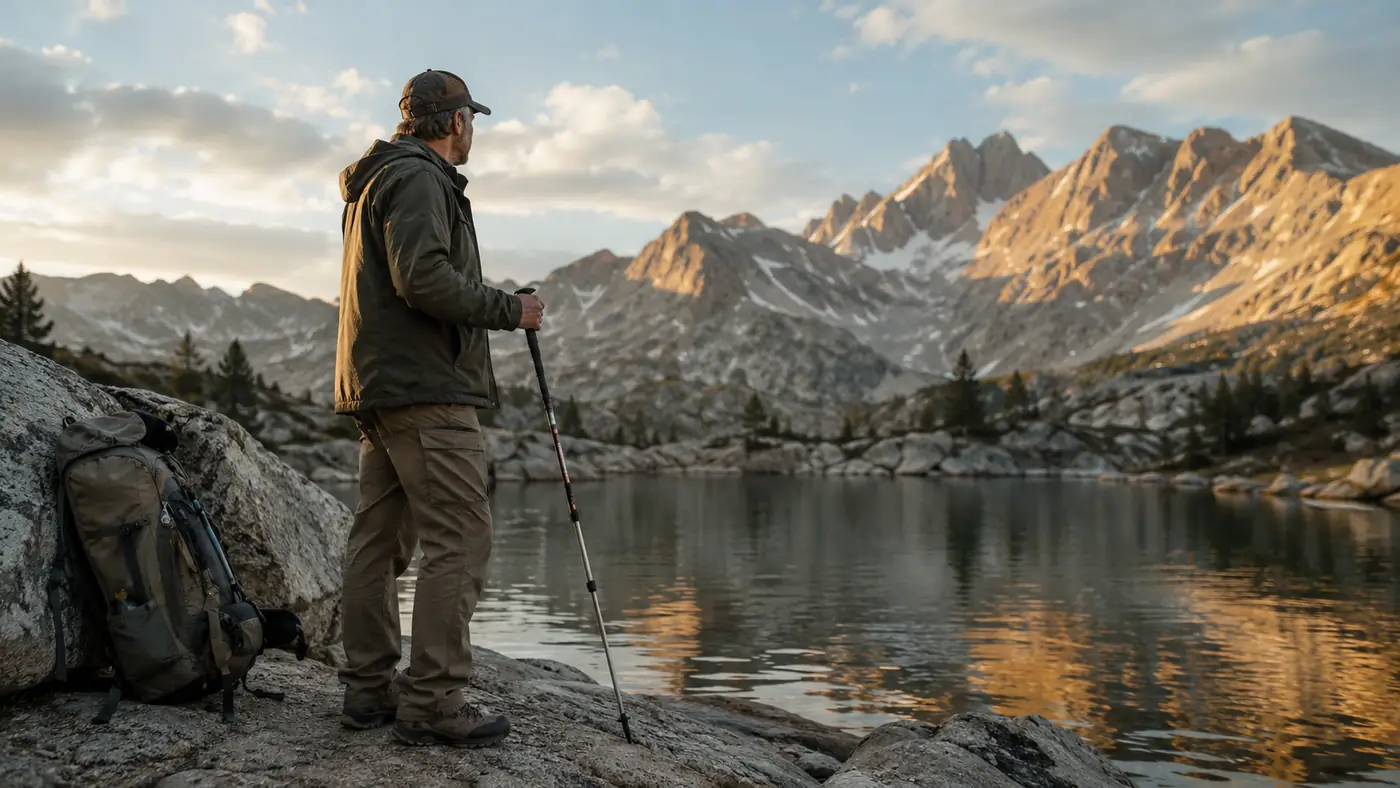
I've hauled a rod into the backcountry that never should have left my truck. Full one-piece spinning rod, four feet of dead weight strapped to the outside of my pack, snagging on every low branch between the trailhead and camp. That was three trips before I figured out what actually works when you're covering miles on foot and fishing is a bonus, not the whole trip.
A travel spinning combo for backpacking has to do two jobs at once. It has to pack down small enough that you forget it's there until you want it, and it has to still cast and fight a fish like a real rod once it's out. Most of the PLUSINNO combos on the shelf at the big box store fail one of those two tests. Here's how I sort the ones that pass from the ones that don't, using the same checklist I run through before any multi-day trip out here in Oklahoma and every trip I've taken into the mountains since.
I grew up fishing farm ponds with whatever rod was leaning in the barn, so I didn't think much about packability until I started putting real miles under my boots. A rod and reel combo that rides fine in a truck bed is a different animal than one that has to survive strapped to a pack for eight or ten miles a day. Weight you don't notice on a bank fishing trip turns into weight you resent by the second day on the trail, and a rod that snags every fourth step turns a good hike into a chore.
The combo I stopped second-guessing on the trail
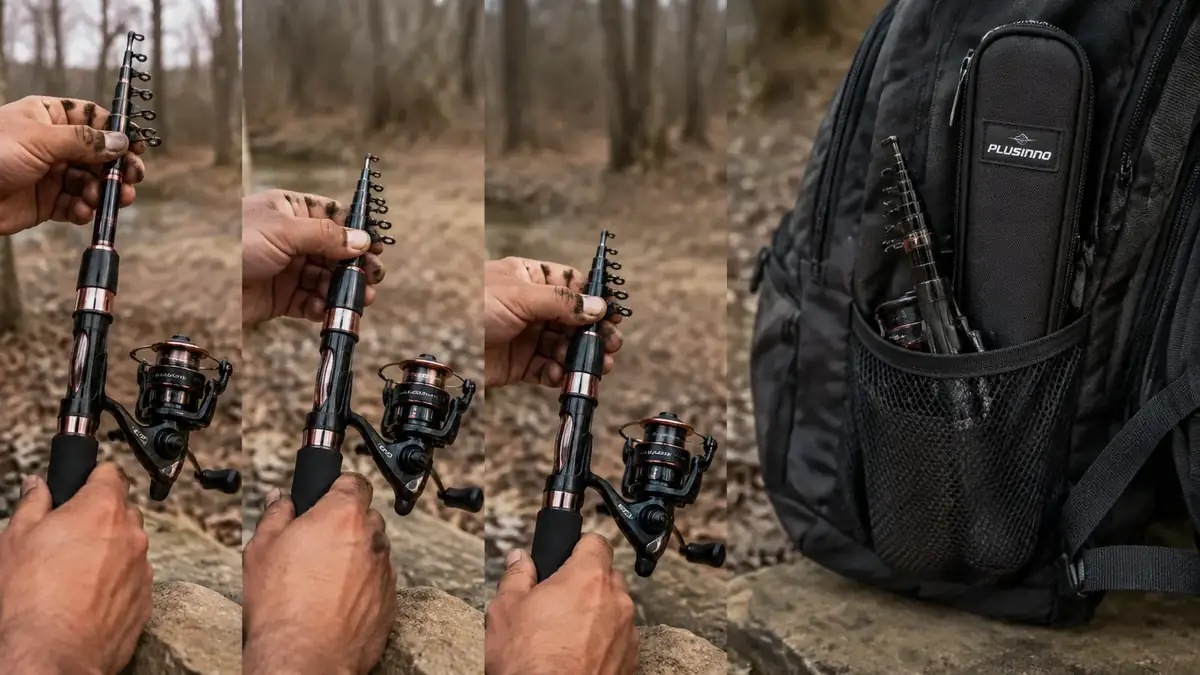
After going through three setups that either snapped a guide or didn't fit my pack, I settled on the PLUSINNO telescopic rod and reel combo. It collapses to under two feet, comes spooled and ready, and has held up over multiple backpacking seasons without babying it.
Amazon Check Today's Price on Amazon →Step 1: Match the packed length to your pack, not your dream cast
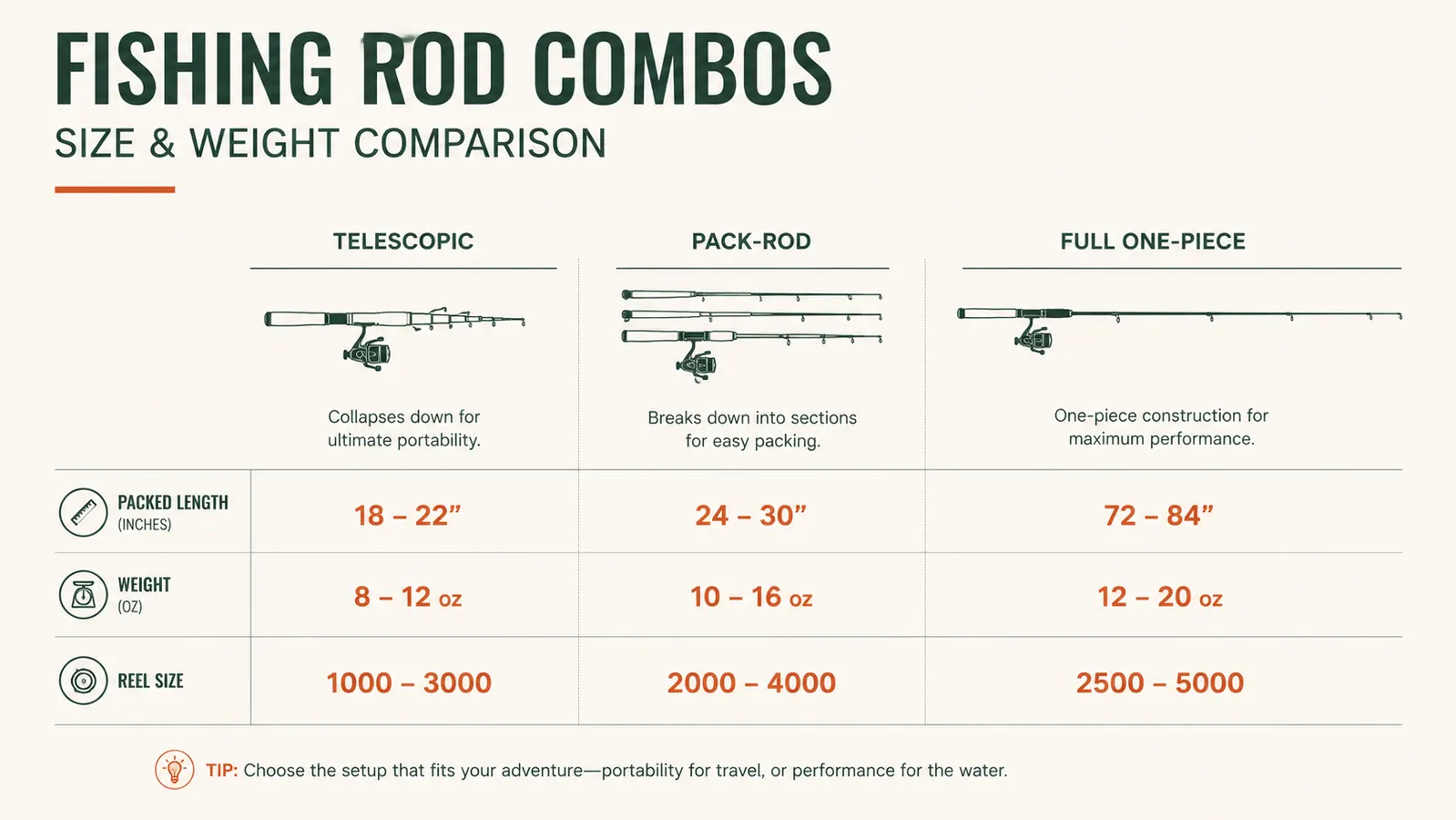
Before I look at anything else, I measure the packed length against the gear I already carry. A rod that's 24 to 26 inches collapsed will slide into the side mesh pocket of just about any backpacking pack or lash flat across the top without poking anyone in the back of the head on a switchback.
This is where telescopic designs earn their keep over standard multi-piece travel rods. A telescopic spinning rod collapses down section over section instead of breaking into three or four loose pieces you have to keep track of. Fewer parts means fewer things to lose at a river crossing or leave behind at camp when you're breaking down at 6 a.m. with cold hands.
I don't chase the longest rod I can find either. A 7-foot rod casts a little farther than a 6-foot rod, sure, but on brushy backcountry streams and small lakes, the extra length just means more branches to duck around. Match the rod to the water you'll actually be fishing, not the water you wish you were fishing.
I also weigh the whole combo, rod and reel together, before I trust it to a trip. Anything under a pound doesn't register once it's strapped to a pack full of food and a tent. Anything heavier than that, and you'll feel it by mile six, especially if you're also carrying a filter, a stove, and everything else that has to come along.
Step 2: Pick telescopic construction over one-piece or bulky multi-piece rods
I used to think telescopic rods were a compromise, something you settled for because you couldn't fit a real rod in your pack. That changed once I put a carbon fiber telescopic combo through an actual season of use instead of one weekend trip.
The guides matter more than the material claims on the box. Stainless steel guides that don't corrode after a week of humidity and sweat, and a tip section that doesn't develop play after a hundred casts, that's the real test. Cheap telescoping rods develop a wobble in the tip section within a few trips. A well-built one holds its action all the way through.
I also check how the sections lock. Twist-lock collars that stay put mid-fight beat friction-fit sections that slip closed the second a decent bass runs. If a rod's sections collapse on you while you're fighting a fish, that's a rod that goes back in the box, not back on the trail.
Carbon fiber blanks flex where they should and hold backbone where they should, which matters more on the trail than it does at home. A rod that's all noodle feels light in the store but folds up on you the second a decent fish turns and runs for cover, and a rod that's all backbone rips hooks out of soft-mouthed panfish. You want something in between, and a carbon fiber telescopic build usually gets you there without the price tag of a dedicated travel rod.
Step 3: Size the reel for the fish you'll actually catch, not the fish you're hoping for
Most backcountry trips put you on panfish, small to medium bass, and the occasional stocked trout, not tarpon. A 2000 to 3000 size spinning reel handles that range without adding unnecessary weight to your pack.
Bearing count gets thrown around a lot in the marketing copy, and I used to ignore it until I fished a reel with a cheap two-bearing setup through a week of grit and dust. It ground rough by day four. A reel built with 10 or more shielded bearings, stainless steel construction, keeps turning smooth even after it's picked up trail dust, sand, and the occasional dunk crossing a creek.
Drag matters too, even on a spinning combo built for smaller water. A smooth, adjustable drag saves your line when a fish you didn't expect decides to make a run, and it means you're not cranking down so hard on light line that you snap off on the first good pull.
I test the drag with my hand before I ever tie on a hook. Pull line straight off the spool with the drag set light, then tighten it down and pull again. It should feel even the whole way, no grabbing, no sticking partway through. A reel that stutters under hand pressure is going to stutter worse when a real fish is on the other end.
Step 4: Check line capacity and spool quality before you buy
A travel combo that comes pre-spooled with decent monofilament or braid saves you a step at the trailhead, but check what's actually on it. Some combos ship with line so cheap it's brittle by the time you unbox it.
I look for a reel that holds enough 6 to 12 pound line to cover a full day of fishing without needing to respool mid-trip. That's usually somewhere around 100 to 150 yards of line in the sizes most backpackers actually use. Anything less and you're re-spooling gear at camp instead of sitting by the fire.
The spool lip matters more than people realize. A rough or poorly finished spool edge will fray your line on every cast, and you won't notice until it snaps on a fish worth keeping. Run your thumb around the spool lip before you trust it on the water.
I also pack a small extra spool of line even when the combo comes pre-spooled, tucked into the same pocket as my tackle wallet. Line gets nicked on rocks and brush over a multi-day trip, and having a backup spool means a bad afternoon of snags doesn't end your fishing for the rest of the trip.
Step 5: Test the whole combo as a system before your trip, not on the trail
I never take a new combo straight from the box to the backcountry. I set it up in the yard first, extend every section, tighten every collar, and make a dozen casts into open ground to feel how it loads and how the reel handles under a real cast.
This is also when I check the fit with my actual pack. I collapse the rod, slide it into the side pocket or lash it under the compression straps, and walk around the yard for ten minutes. If it's already annoying me in the driveway, it's going to be worse eight miles in.
Last thing I check is how it comes back apart after use. A combo that's a fight to collapse after a full day of casting is a combo you'll dread breaking down at camp. Everything should telescope back down with one hand while you're holding a stringer of fish in the other.
I run this same test after a rain too, if I can manage it, hosing the reel down and casting again once it's dried off some. A combo that starts grinding or sticking after getting wet once isn't going to survive a week of dew-soaked mornings and stream crossings. Better to find that out in the yard than three days from the trailhead.
What Else Helps
A hard rod tube isn't practical for backpacking, but a simple neoprene rod sleeve keeps the tip section from getting crushed against your other gear. I also carry a small tackle wallet instead of a full box, just enough hooks, a few soft plastics, and split shot to cover the water I'll actually fish. And I always dry the reel off before I pack it back up, even a quick wipe down keeps grit out of the bail and drag over a multi-day trip.
I keep a small multitool with pliers clipped to the same pocket as my rod sleeve. Half the trouble on the trail isn't the fishing, it's getting a hook out of a fish's throat or cutting frayed line without a knife in your hand. Small stuff like that adds almost no weight and saves a real headache when you're miles from the truck and just want to get back to camp before dark.
One more habit that's saved me more than once, I check the forecast before I decide how much fishing gear makes the final pack list. A dry stretch means I'll carry the combo the whole route. A string of storms coming through means I might leave it strapped to the pack cover instead of loose, so a sudden downpour doesn't leave the reel sitting in standing water at the bottom of a dry bag. Small planning like that keeps a good combo working for years instead of one hard season.
The best backpacking rod isn't the one that impresses your buddies at the trailhead. It's the one you forget is even in your pack until you need it.
Ready to stop compromising between packable and real
The PLUSINNO combo covers every step above, telescopic build, shielded stainless bearings, and a packed length that actually fits a backpacking pack. It's the one I keep reaching for.
Amazon Check Today's Price on Amazon →